Prehistoric Planet: Ice Age
Framestore joined forces with BBC Studios Natural History Unit and Apple TV for the third season of Prehistoric Planet, a groundbreaking documentary series executive produced by Jon Favreau and Mike Gunton. This new season left the age of dinosaurs behind to focus on the extraordinary megafauna of the Ice Age.


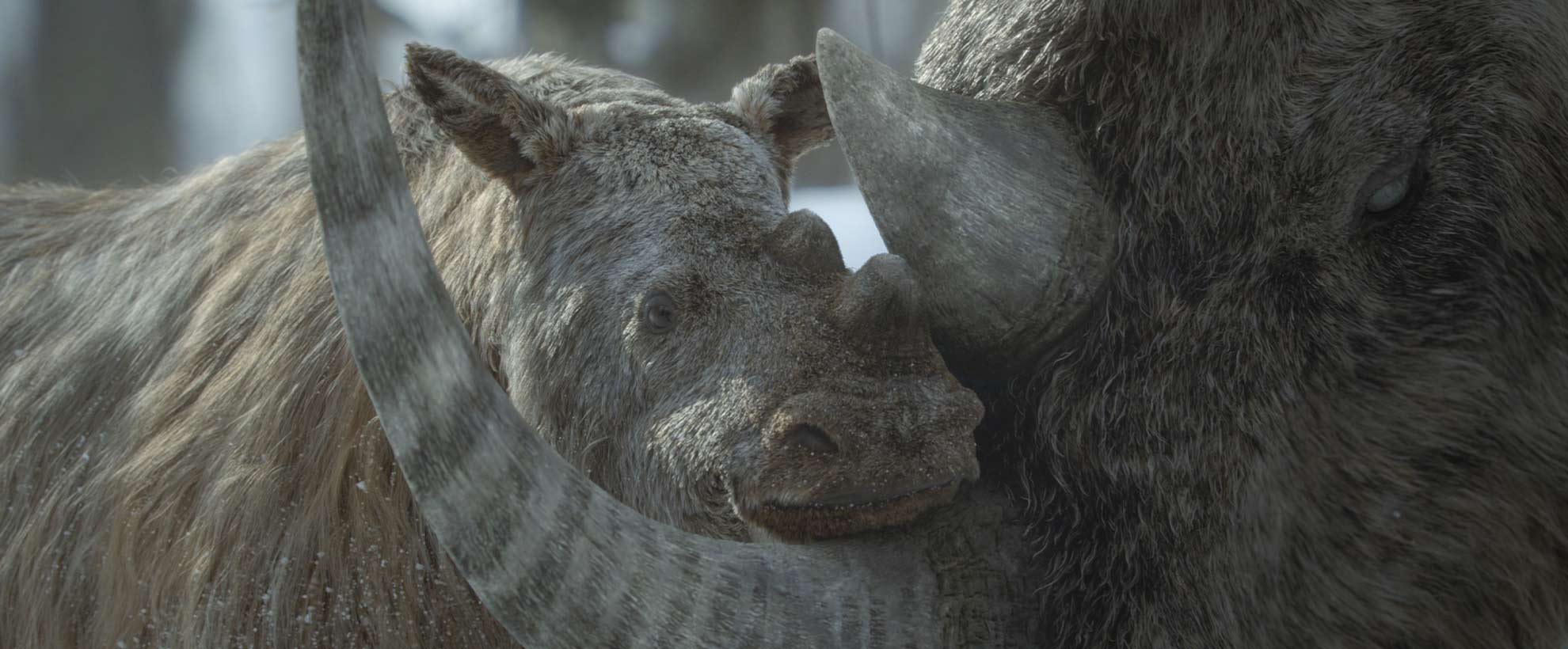
Framestore was tasked with developing VFX and animation for over 40 scientifically accurate creatures, many never before seen on screen, from saber-toothed cats to rhino-sized wombats, tiny island elephants and the largest ape to ever live. The challenge? Make them feel as real, grounded and emotionally compelling as a snow leopard on a nature doc, while dealing with more fur than any Framestore project to date.
Prehistoric Planet: Ice Age has been an epic journey of exploration for Framestore. With Production-Side VFX Supervisor Russell Dodgson guiding the way, our Art Department, VisDev, Pre-Production (FPS), and VFX teams across London, Montreal, and Mumbai have brought to life the spectacular inhabitants and habitats of the Ice Age. From towering woolly mammoths to elusive snow sloths, and terrifying saber-toothed tigers to resilient dwarf elephants, the series reveals the epic struggles and unexpected stories of animals that once ruled this frozen world.
I’ve been aware of Framestore and their incredible work for many years, and I was excited at the opportunity to finally collaborate with them on season three of Prehistoric Planet. Bringing long-extinct Ice Age creatures to life in a believable way is one of the most ambitious challenges you could task a vendor with, but Russell’s creative partnership and the groundbreaking work of the whole Framestore team went above and beyond our expectations.

A Mammoth Undertaking
Unlike previous seasons, Prehistoric Planet: Ice Age demanded a major creative and technical pivot. "The dinosaurs were mostly scaled and feathered, here, we were dealing with shaggy fur, thick hides and complex social behaviour,” explains Russell Dodgson, Production VFX Supervisor. “It wasn’t just about photoreal creatures. It was about emotional believability.”
The signature visual style of the series remained firmly rooted in the grammar of natural history filmmaking. In preparing for location shoots, the previs from FPS deliberately broke traditional film continuity, mimicking how documentaries are assembled from various different takes and angles captured across different days.


Every frame was designed to feel as though it had been captured by a real film crew in the wild, using long-lens cameras and grounded, observational framing. To sell the illusion further, deliberate camera imperfections were added, such as adding a tiny amount of micro-jitter on static shots to simulate the operator's hand holding the heavy telephoto lens, and natural instances where the camera does not immediately hit sharp focus, “There are no hero angles, no impossible camera moves,” says Dodgson. “The whole thing is built on intentional restraint. And that makes it harder, because there's nowhere to hide.”


Shooting Like It’s 20,000 BC
Key to selling the illusion was the introduction of full-scale technical reference puppets on location. Framestore teams travelled with the production crew to 18 countries, spanning Iceland, Mongolia, Poland, and beyond, using these creature stand-ins to accurately shape framing, depth of field, and camera rhythms directly on set.
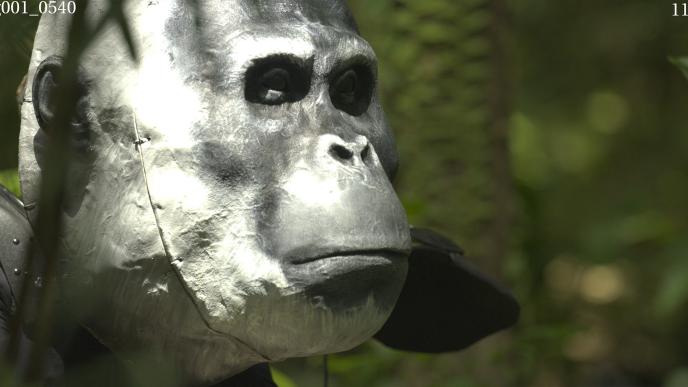
“The puppets were not just for show,” says Animation Supervisor Chris Hurtt. “They helped camera ops make those tiny, instinctive focus pulls and reframes that give the show its realism. Once removed, our CG creatures slotted seamlessly into scenes that already had the warmth of human decision-making built in.”
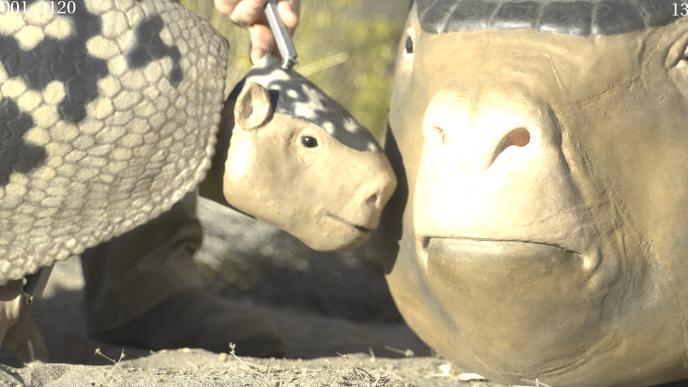
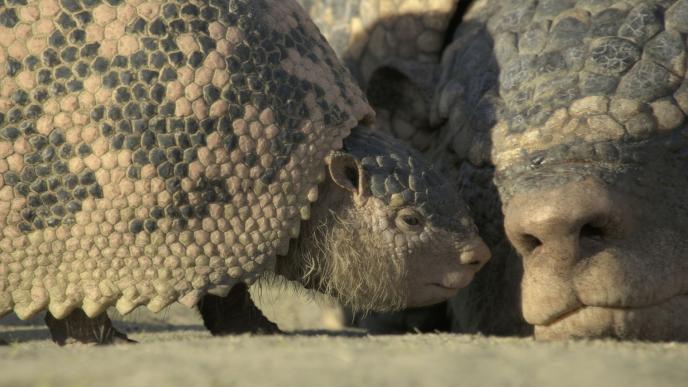
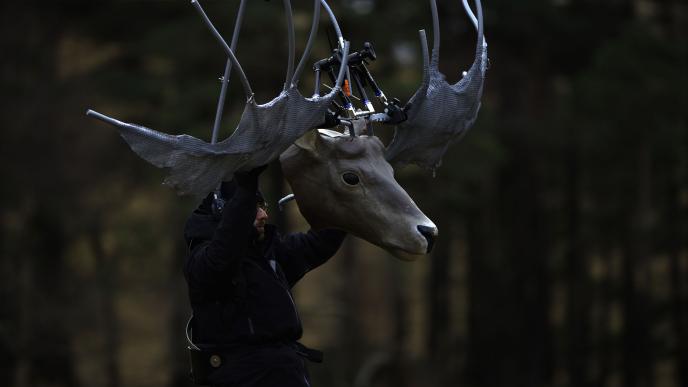
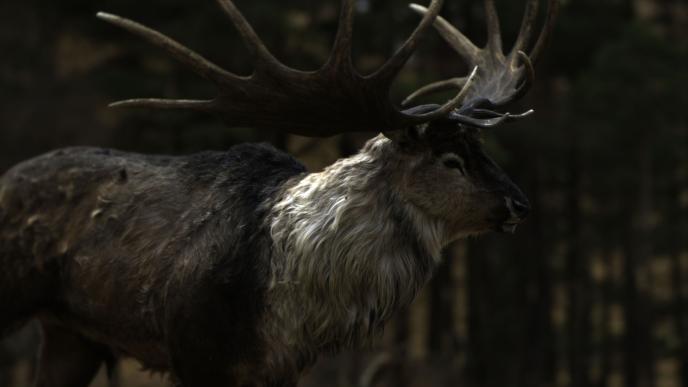
This physical methodology extended directly into lighting and performance. “We’d observe exactly how natural light played off the puppet’s fur or how deep powder snow stuck to it,” Hurtt explains. “That informed how our creatures moved through their environments. It gave every shot a tangible, tactile weight.
Fur, Snow, and the FAT of the Land
With some of the most fur-intensive assets Framestore has ever handled, the team rebuilt its grooming and simulation pipelines from the ground up. The greatest technical hurdle was making the interaction between highly detailed creatures and deep, fresh powder snow feel spontaneously real across nearly 80 complex, hero shots.
“In most VFX, fur collisions are still an immense challenge,” notes Russell Dodgson. “Two furry animals tumbling together? That breaks everything. We built a new fur system capable of dynamically handling hair density, clumping, layering, and crucially, responding to snow.”
Every location had its own snow profile: fine powder, icy crust, and melting sludge. Houdini was used to model how snow particles interacted with the fur based on real-world temperature and weather data. “Snow at -40 degrees Celsius behaves like dry crystalline diamonds,” says Dodgson. “Wet snow clumps. These are the kinds of details that sell a scene.”
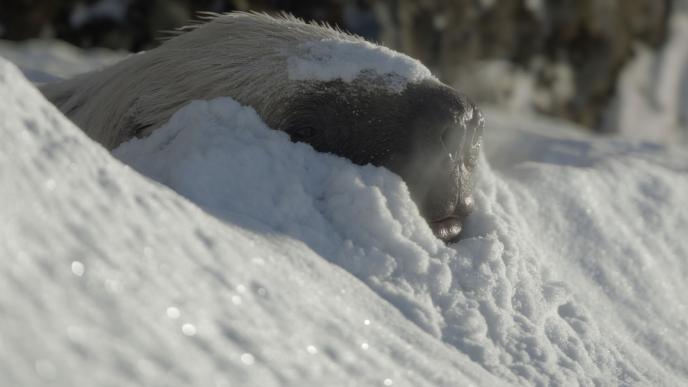
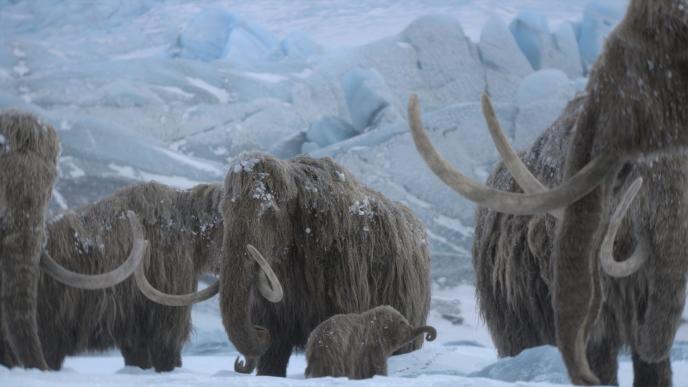
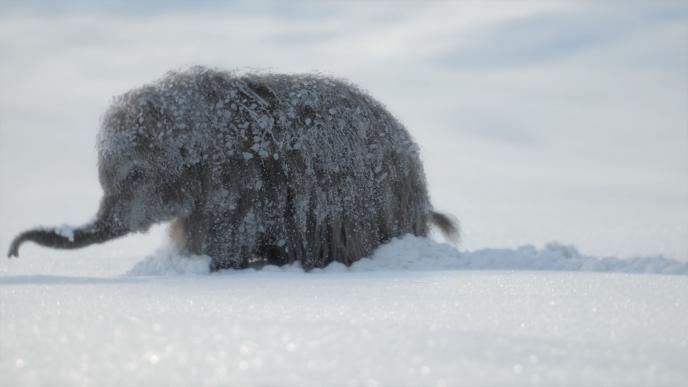
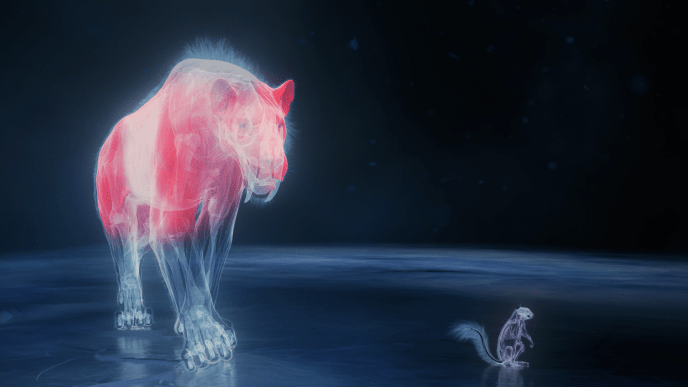
Framestore’s proprietary anatomy framework, FAT (Framestore Anatomy Tool), played a pivotal role in simulating complex muscle, fat, and skin dynamics — essential for the close-up, slow-motion shots where creatures breathe, stretch, or brace against the polar wind.
“We didn’t use AI. Every shot is completely handcrafted. You can’t train a model on mammoth behaviour — nobody’s seen a living one. It’s all artist-driven.”
Built From Bone, Verified by Science
All creatures were created in close collaboration with the show’s Lead Scientific Consultant Dr Darren Naish and the Natural History Unit, using detailed asset packs containing fossil records, muscle structure references, preserved specimens and cave art.
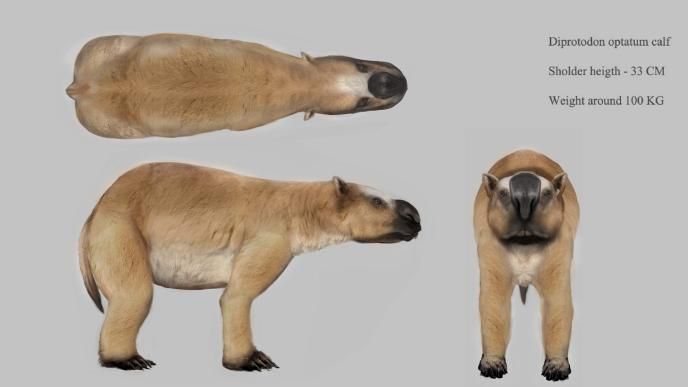
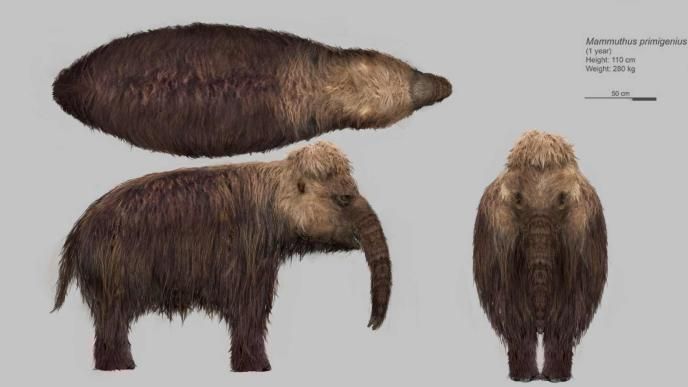
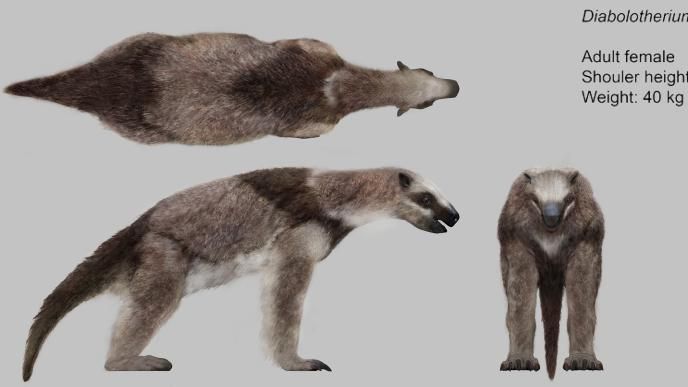
“These were the most accurate Ice Age creatures ever brought to the screen,” says Dr. Naish. “From the curvature of a sabre-toothed cat’s lips to the way a baby mammoth rolls in the snow, everything was based on the latest research — and occasionally discoveries made mid-production.”
When new fossil data emerged from Siberian permafrost, Framestore adjusted their models accordingly. “We’d finish a scimitar-toothed cat, and a week later a mummified cub is found that changes what we know about its anatomy,” says Showrunner Matthew Thompson. “That’s the nature of working at the frontier of science.”

The most difficult creature to build was arguably the Gigantopithecus. Known to palaeontology primarily from jaw fragments, the team realised the initial model sheets — based on modern ape proportions — would not function mechanically, as the size of his jaw was so massive that it was intersecting with the chest all the time. This forced them to constantly adjust the underlying skeletal anatomy and movement in a way that ultimately informed palaeontological understanding.
The visual accuracy extended to tiny, scientifically informed details that enhance believability.

The Smilodon’s massive canines required a significantly stronger upper muscular system and altered predatory locomotion, forcing the animal to dispatch prey by slicing soft tissue rather than relying on standard suffocation bites.

The cave bear was meticulously modelled with a prominent skeletal hump, allowing it to store vital fat reserves required to survive its long winter hibernation.

For the predatory lizard Megalania, the team precisely modelled a functional nictitating membrane, or third eyelid, while selecting an eye colouration based on its specific habitat to ensure plausible survival traits.

The mating rituals of the Giant Moa were designed around current research showing that females actively selected males who made themselves look smaller and less threatening, reversing the typical larger-is-better animal paradigm.
Craft Meets Credibility
Framestore’s global team of artists, animators, and creature specialists all five episodes, with each creature lovingly brought to life through cycles of modelling, rigging, grooming, lighting, lookdev, animation, and CFX, with scientific feedback woven into each cycle.
Creature Supervisor Dorothy Ballarini notes that the entire asset workflow was defined by a constant feedback loop with the scientific team. Unlike standard creature work, models were strictly bounded by the fossil evidence. "The riggers and animators ran extensive tests to ensure biomechanical accuracy," Ballarini says. "If a movement defied the fossil record, we looped back to modelling."
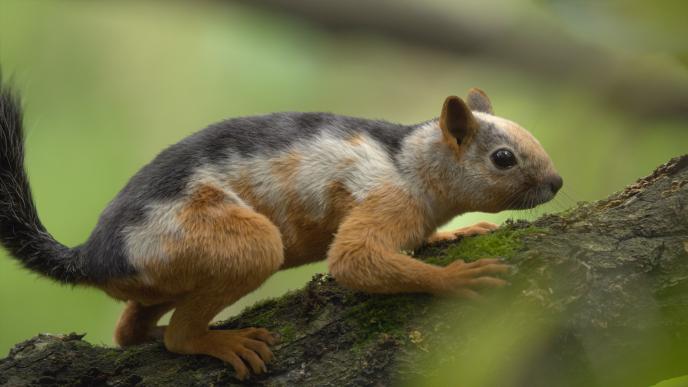
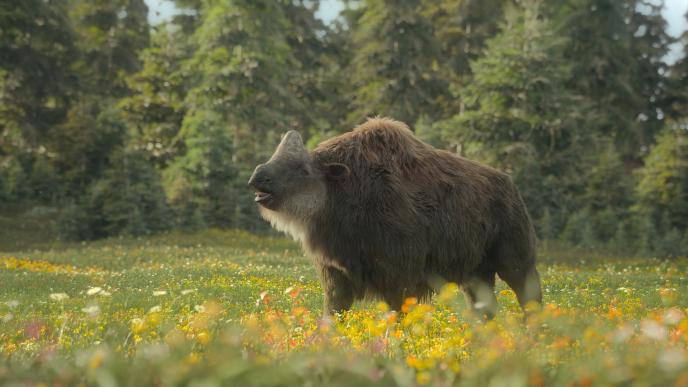
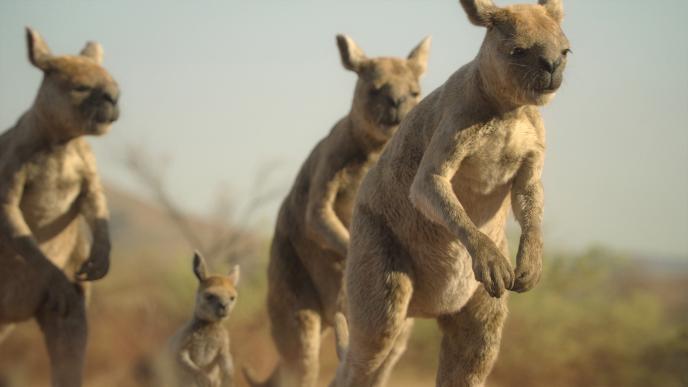
Once a model was approved, the process moved into texturing and grooming, where the team could carefully introduce creative interpretation within strict scientific limits. “There’s not a lot of evidence of how the groom and texture will look,” Ballarini notes, so artists worked closely with palaeontologist Darren Naish to add subtle storytelling details — thicker skin, sunburn, or scarring — to suggest how each animal lived and survived in its environment. Environment itself played a key role in shaping final performances; animals adapted for snow, for example, required altered biomechanics and gait. “They wouldn’t walk like they would walk on a flat surface,” she explains. This attention to function, movement, and habitat ensured that each creature not only looked authentic, but felt alive — helping both audiences and scientists alike better understand how these long-extinct animals may once have moved through their world.
The Eyes Have It
Beyond larger movement, Animation Supervisor Alvise Avati identifies eye performance as the single most critical element to selling life on screen, noting that while you can have a digital character moving perfectly, they will look dead if their eyes don’t look alive. On Prehistoric Planet: Ice Age, the animation team devoted enormous attention to eye performance, particularly because of the show’s extended close-ups and locked-off documentary shots.
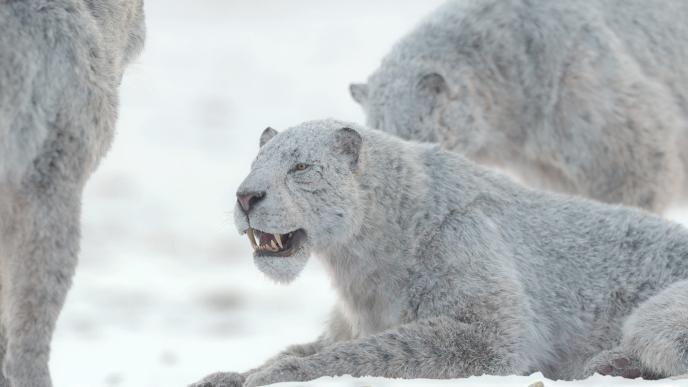
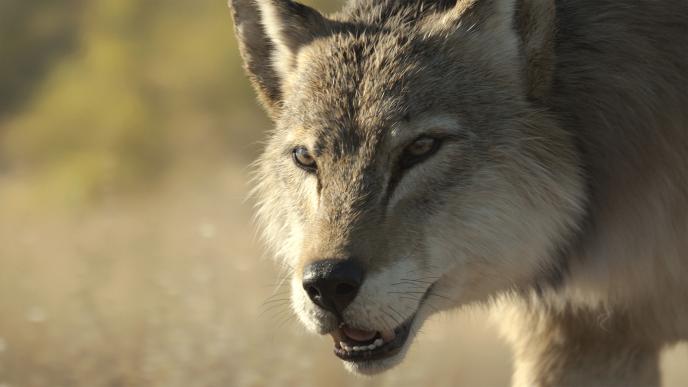
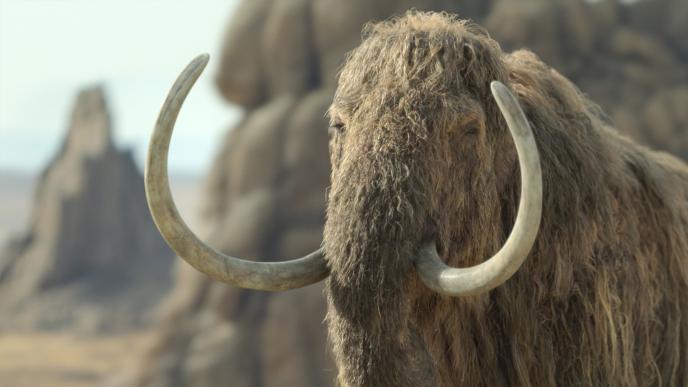
Subtle eye darting, eyelid tracking, blinking frequencies, and the interplay of tiny muscles around the ocular socket were carefully crafted to create the illusion of thought and awareness. “It’s particularly tricky to get the eyes looking alive, but that’s the most important thing,” Avati notes. Combined with gentle breathing cycles and lightly simulated hair movement — sometimes driven by the faintest suggestion of wind — these layers of nuance ensured that even a motionless creature felt present and alive.

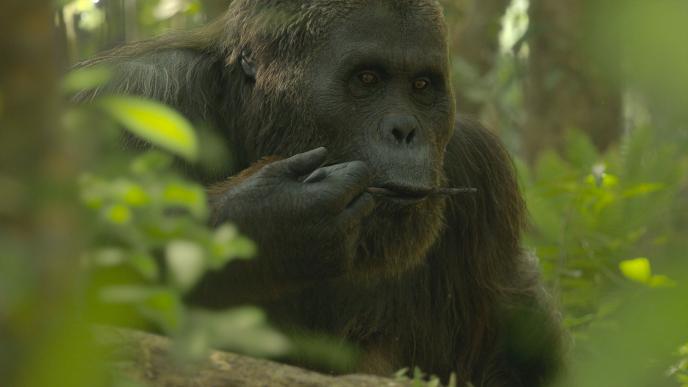
This philosophy is exemplified in Avati’s favourite Ice Age sequence, featuring Gigantopithecus. The sequence is deliberately restrained, following a solitary ape through quiet, everyday actions — walking, sitting, eating, and occasionally reaching for ants with a stick. “Nothing really big happens,” Avati says, yet the emotional weight comes from stillness and observation. Extreme close-ups linger on the creature’s face, where a sense of loneliness and melancholy is conveyed almost entirely through the eyes. “When you have an extreme close-up on a face, the eyes have to tell everything,” he explains. In a creature capable of expressivity but not human-level facial nuance, eye performance became the key to empathy. The result, Avati believes, is a sequence where audiences can truly connect with the animal.
The Result
Prehistoric Planet: Ice Age debuted to widespread critical acclaim, widely hailed as “one of the most technically sophisticated natural-history series ever made.” Framestore’s work elevated natural history storytelling by infusing technical innovation with profound emotional depth, technical innovation, and scientific integrity.
We fell in love with these animals. The fact that you can look at a woolly rhino, a marsupial lion or a baby stegadon and feel something — that’s the magic Framestore brought to the table.”
Press
Prehistoric Planet: Ice Age: 5 reasons to watch Apple TV’s mammoth new natural history show - Shortlist
Prehistoric Planet: a new season is coming… But the dinosaurs are gone! - 3DVF
Prehistoric Planet: Ice Age Stands on Every Hair, Snowflake, and Puppet for VFX - Innovation & Tech Today
'The closest you're ever going to get...to Ice Age animals' - CBBC Newsround
7 Reasons to watch Tom Hiddleston's Prehistoric Planet: Ice Age - Radio Times
Extinct animals in Prehistoric Planet: Ice Age make it a must-watch - New Scientist
How Framestore helped make the creatures and cinematography of ‘Prehistoric Planet: Ice Age’ feel so real - Befores & Afters
Observing Ancient Creatures in Prehistoric Planet: Ice Age - American Cinematographer
Apple TV+ sets date for Prehistoric Planet: Ice Age - Televisual
Scimitar Toothed Cats Star In Images From The Return Of Apple TV+’s Prehistoric Planet - ScreenRant
Credits
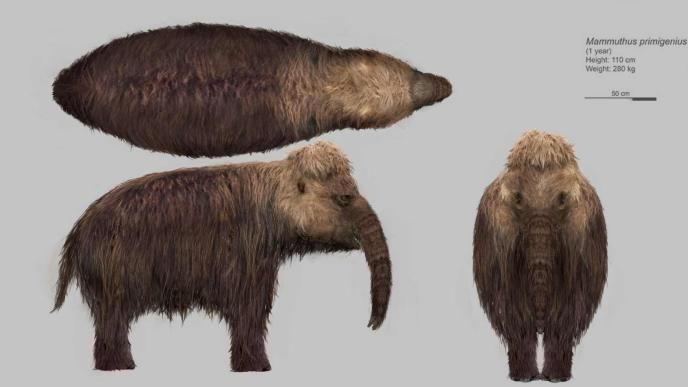
Prehistoric Planet: Ice Age : Art Department
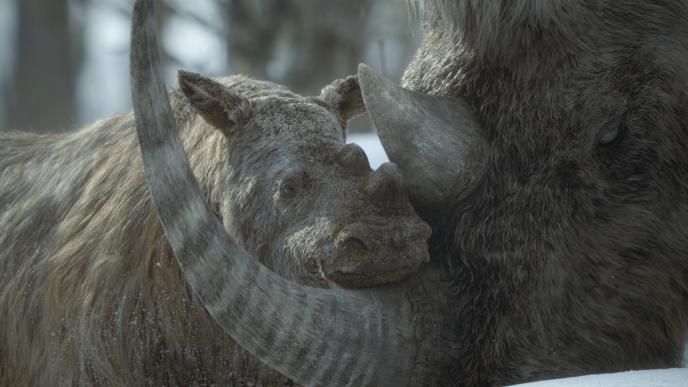
Previsualisation Prehistoric Planet: Ice Age