War Machine
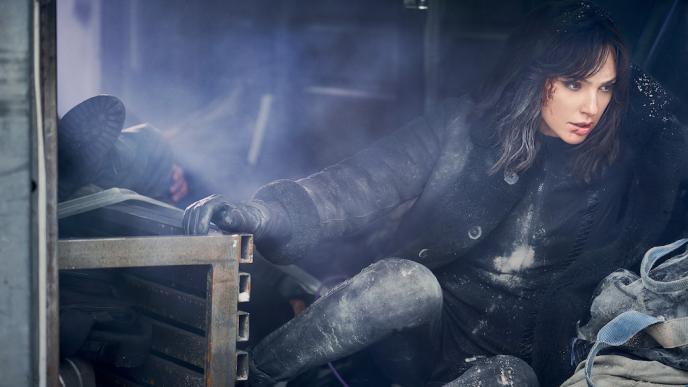
Framestore’s Melbourne and Mumbai studios power the intense visual world of War Machine, a relentless sci-fi action spectacle set on a near-future battlefield where advanced military technology collides with raw human determination. Directed by Patrick Hughes and starring Alan Ritchson, the film drops audiences into a brutal, high-stakes conflict where survival hinges not only on firepower but on courage, sacrifice, and an unbreakable will to endure.
Across 252 shots, Framestore crafted a gritty, visceral vision of futuristic warfare. Under the supervision of VFX Supervisor Joao Sita, the teams delivered complex battlefield environments and brutal combat technology that heighten the film’s intensity while keeping the spectacle grounded in realism.
Streaming exclusively on Netflix from March 6.

Forged for Battle: The Making of the War Machine
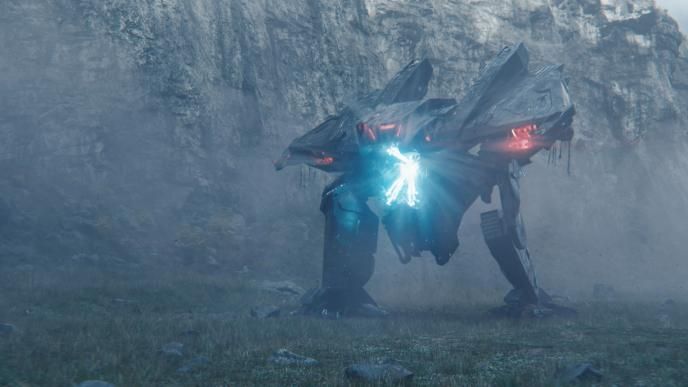
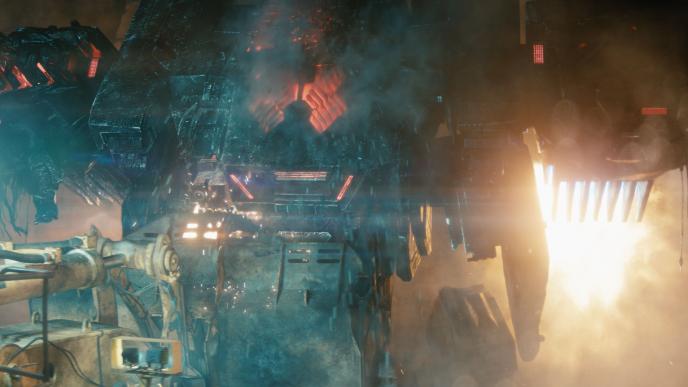
At the heart of War Machine lies its most formidable presence — the War Machine itself. Conceived not simply as a machine but as a relentless hunter, the character became the central visual challenge for Framestore’s Melbourne and Mumbai teams. “We received base models early in production, then refined them by removing human-made details — like panels, hinges and welds — in favour of a more fluid, simplified design, bringing the asset to a shot-ready state,” notes VFX Supervisor Joao Sita.
Rather than leaning into a purely mechanical design, the animation team approached the character with a more organic philosophy. “The goal was to make the War Machine feel more animalistic and less like a traditional robot,” explains Animation Supervisor Daniel Fotheringham.


We looked at dinosaurs and other bipedal creatures for inspiration — focusing on weight, imbalance and predatory movement to give it a sense of instinct rather than just machinery.
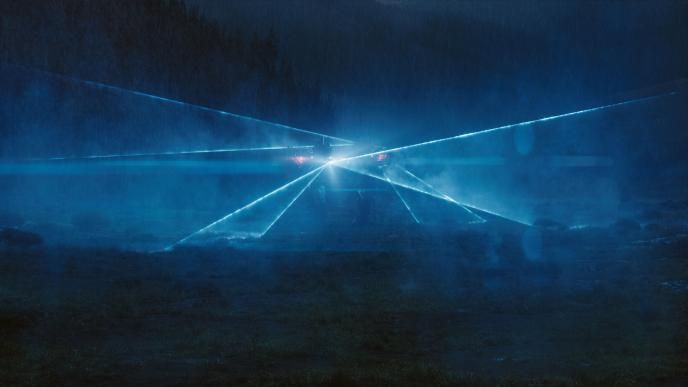
This thinking informed how the machine stalks, hunts and reacts, including its ability to analyse its surroundings through a scanning system that “breathes in” atmospheric particles. Visualised as a striking laser sweep across the landscape, the effect was first explored in London and later refined in Melbourne.
The team also developed a damaged version of the asset, featuring a broken wing that altered its locomotion and introduced moments of instability and unpredictability. “Because the War Machine is essentially another character in the film, the asset had to hold up in every possible scenario,” adds Sita. “It needed to perform convincingly in close-ups, interact with complex environments and remain consistent across work shared with other vendors.”

Developed collaboratively between Melbourne and Mumbai, the asset evolved alongside the film, with multiple texture variants ensuring continuity as battle wear accumulated. “Texturing the War Machine meant balancing mechanical complexity with environmental wear,” says Texturing Lead Ajinka Vartak.
“Starting from polished previz, we grounded the War Machine in real-world references — from stealth jets to worn machinery — while keeping it distinctly alien. That blend of military-grade realism with an otherworldly edge helped shape its evolving, battle-worn look. The War Machine also evolved through six stages of destruction — from subtle wear to heavy damage — using both model changes and texture variations. To manage that complexity, we built a flexible, layered ‘uber’ shader system, so updates could be made once and applied consistently across all versions,” adds Lead Lookdev Artist Alex Canniccioni.
Together, these developments ensured the War Machine evolved not just as a visual asset, but as a fully realised and dynamic character within the film.
The Guardian Chase: A Cross-Studio Pursuit
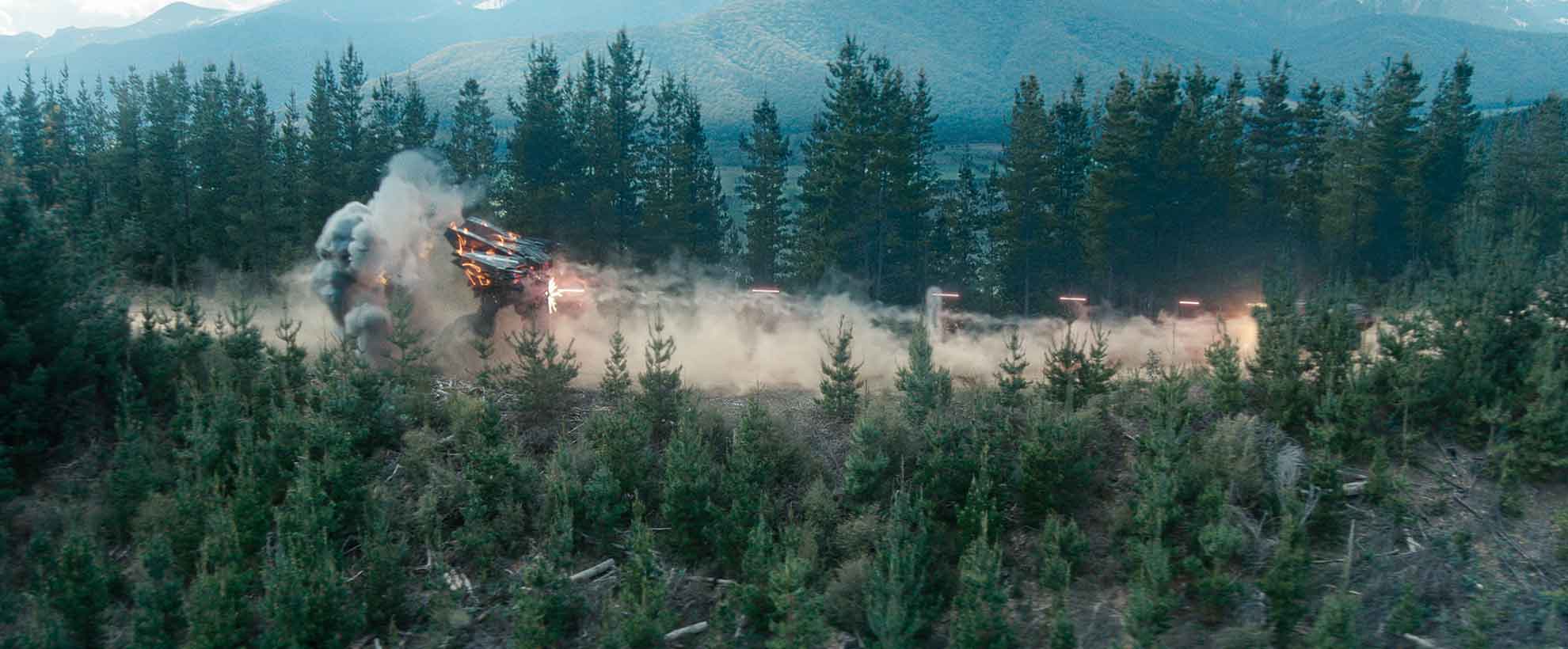
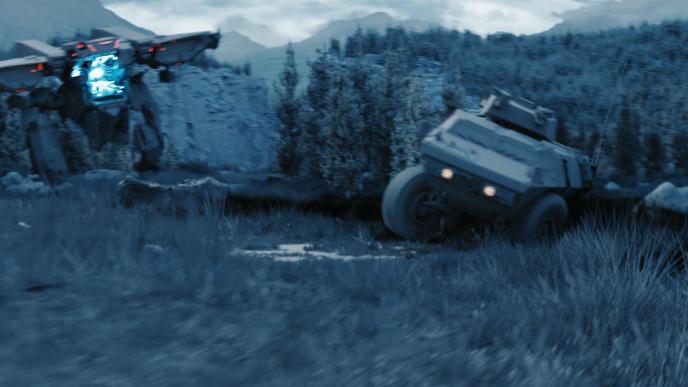
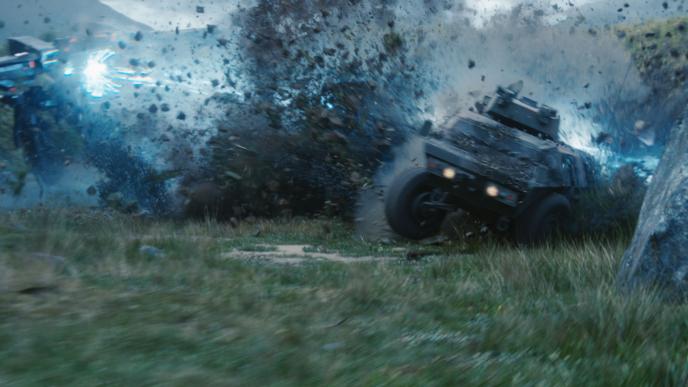
Once the War Machine enters the story in full force, the film pivots into the guardian chase—one of its most intense sequences, with a surviving ranger fleeing across unforgiving terrain in a relentless pursuit.


The chase sequence was a great example of the rhythm we developed between Melbourne and Mumbai.
“Shots were moving back and forth between the teams, with both contributing heavily to the effects and lighting that give the sequence its intensity.”
The complexity of the sequence was driven in large part by its FX-heavy shots, which demanded a considered lighting approach to maintain both flexibility and control. “From a lighting perspective, many of the shots were creatively very strong and packed with FX elements,” explains CG Supervisor Rakesh Thota. “Breaking these into structured layers and rendering volumes efficiently was essential so the compositing team had the control they needed to shape the final image.” Working in close sync, the teams established a seamless creative rhythm that allowed the chase to unfold with speed, scale and intensity.
The ‘Oner’ Challenge
The film’s complex long-take “oner” demanded a macro-to-micro approach, with the camera moving seamlessly through a vast, connected environment without the benefit of traditional cuts or cheats. To support this, the team developed robust optimisations—ensuring environments delivered high-fidelity detail up close while remaining efficient to render at scale, with the flexibility to support rapid creative changes. Grounded in extensive reference photography, targeted DMP work helped unify the environments with cohesive detail and atmospheric depth.
“The oner was definitely our biggest mountain to climb,” says Cedric Moens de Hase, Lead Environment Artist. “Beyond the sheer scale, we had to work in lockstep with Layout and FX—the environment wasn’t just a backdrop, it had to react to the action.” He adds, “It required a highly modular approach, so as the animation evolved, we could continuously re-engineer the environment around the performance.”
From Ravines to the Quarry: Building the Battlefield
Beyond the creature work, Framestore’s Melbourne and Mumbai teams also delivered a significant volume of environment and FX work—ranging from vast, war-torn landscapes to high-impact destruction—crafting complex digital worlds that reinforce the film’s gritty, grounded tone. “Our biggest challenge on the environment side was the need for quick turnarounds without a locked edit or clear technical direction,” explains de Hase. “That meant building fully flexible, 360-degree environments that could hold up from every angle.”
Midway through production, the scope expanded further with the late addition of a ravine sequence. “What began as a contained moment quickly evolved into a large-scale environment build requiring detailed terrain development, ground interaction, atmospheric work and large pyro effects to enhance the scale of the sequence,” adds Sita.
With the film heavily driven by effects—featuring laser blasts, plasma fire, sparks, dust and large-scale explosions—the work demanded tight coordination across FX, lighting and rendering. “One of the key technical challenges was maintaining visual complexity while ensuring the renders remained efficient,” adds Thota.
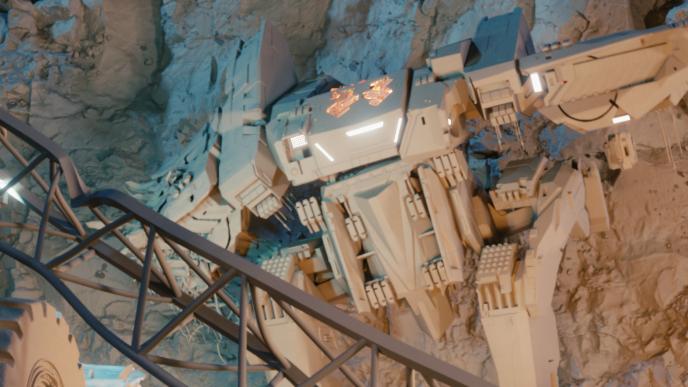
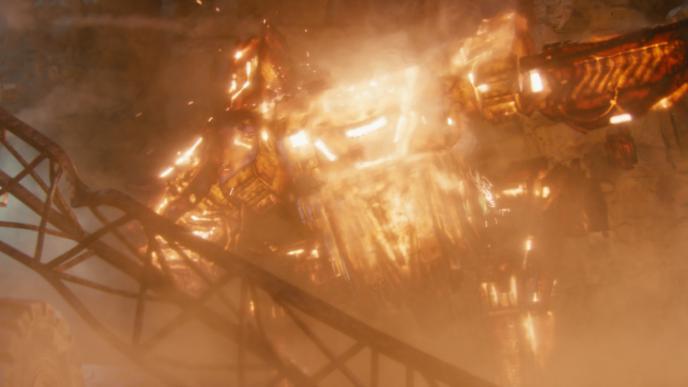
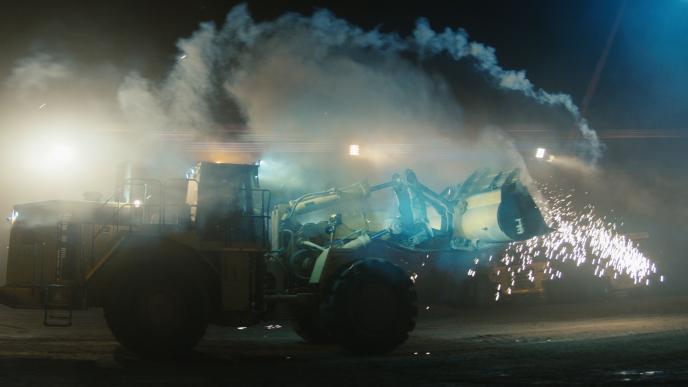
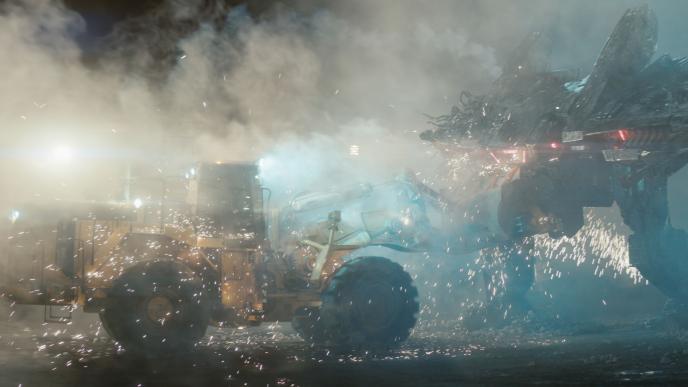
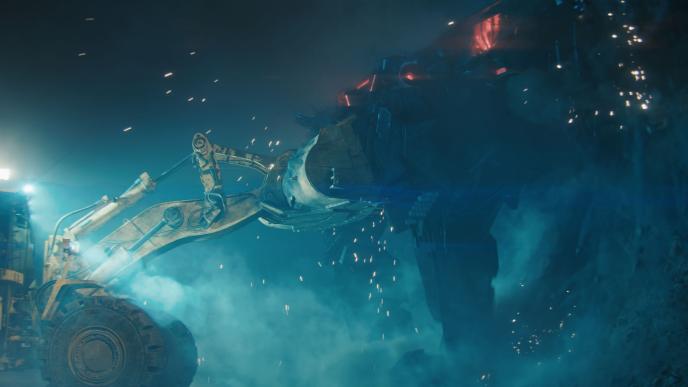
The climactic battle unfolds in a quarry, where the protagonist sets a trap for the War Machine using heavy machinery. While practical excavator footage was captured on set, its motion lacked the intensity needed for the escalating confrontation, leading the team to partially—and in some shots entirely—replace it with a CG version.
“The quarry environment evolved quite a lot over the course of production,” explains Compositing Supervisor Darcy George. “Once we replaced the excavator digitally, it opened up far more creative freedom in terms of movement, timing and the level of damage we could introduce.
What started as a fairly straightforward environment ended up becoming a much larger build, but that extra scope gave the sequence the energy it needed to feel like a real climax.
Throughout production, the Melbourne and Mumbai teams maintained a closely coordinated workflow, sharing reviews and priorities across locations. “It was a truly collaborative effort between both locations,” concludes Thota. “From production to supervision, everyone stayed aligned and supported each other throughout the process.”
Together, these sequences brought the War Machine to life as both a relentless adversary and a fully realised cinematic character. From creature development to large-scale environments and effects work, Framestore’s Melbourne and Mumbai teams combined their expertise to deliver some of the film’s most ambitious moments.

Credits
Related Case Studies
Civil War
The Tomorrow War