ONE PIECE Season 2
Following our work on ONE PIECE Season 1, Framestore’s VFX team ventured deeper into the Grand Line for Season 2; an unpredictable new chapter filled with formidable adversaries and fan-favorite characters.
Building on an established visual language, we continued to evolve the Devil Fruit abilities of Luffy and Buggy while introducing new powers for Smoker, Wapol, alongside bringing the beloved Tony Tony Chopper to life. From nuanced facial performance and expressive animation to seamless VFX integration, our goal was to ensure every moment felt grounded, believable, and alive.


Smoker the White Hunter
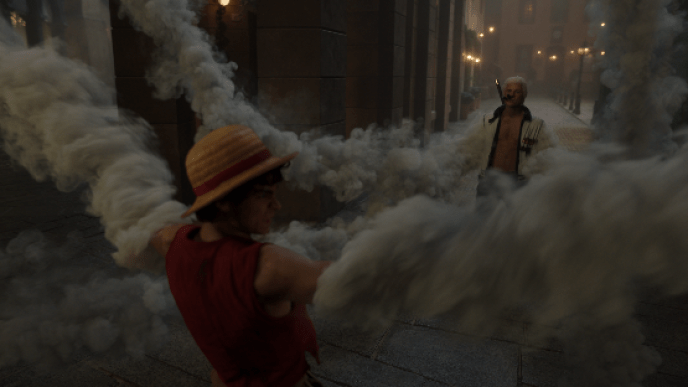
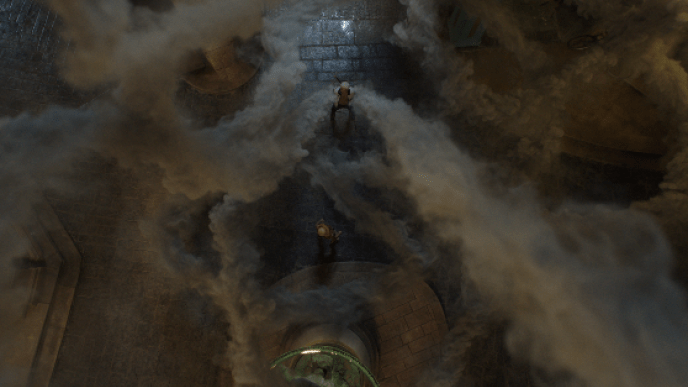
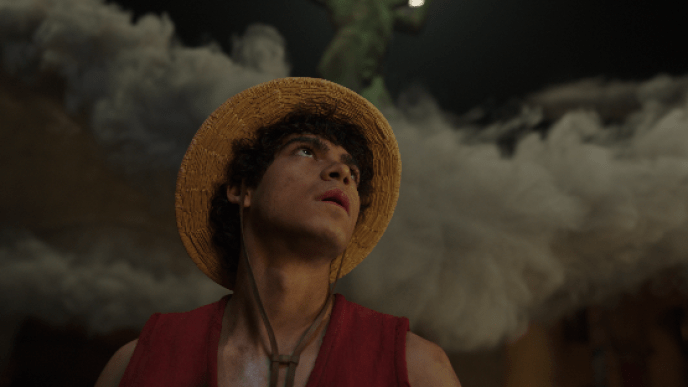
Smoker presented a unique challenge in translating a character whose powers need to feel airy and intangible when attacked, yet overwhelmingly dangerous and concrete when striking back. When crafting his devil fruit powers for the screen, we had to consider speed and power, while still maintaining the swirly silhouettes and wispy qualities inherent to smoke. A key creative consideration was ensuring the smoke never felt “creature-like” and remained an extension of Smoker’s control, not something with its own agency.
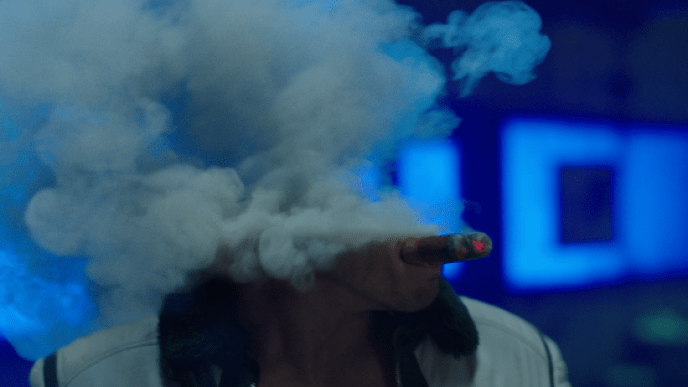
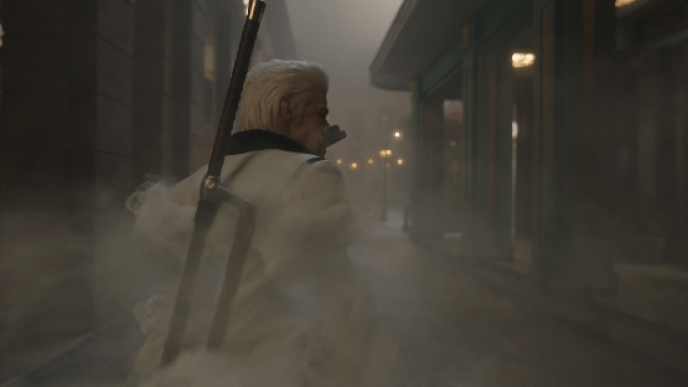
To achieve this, we carried out extensive look development, exploring variations in speed, density, and shape to strike the right balance between softness and force. The smoke needed to feel light enough for Luffy’s attacks to pass through, yet capable of condensing into impactful, physical forms. For transformation sequences, we referenced Terminator 2: Judgment Day, adopting sharp, surface-driven transitions rather than dissolves to give the effect a more tactile, controlled quality. The result is a power set that feels both grounded and dynamic, while staying true to the spirit of the original design.
Tin-Plate Wapol
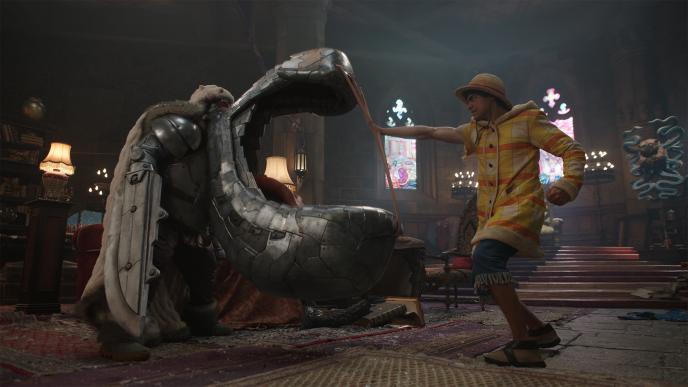
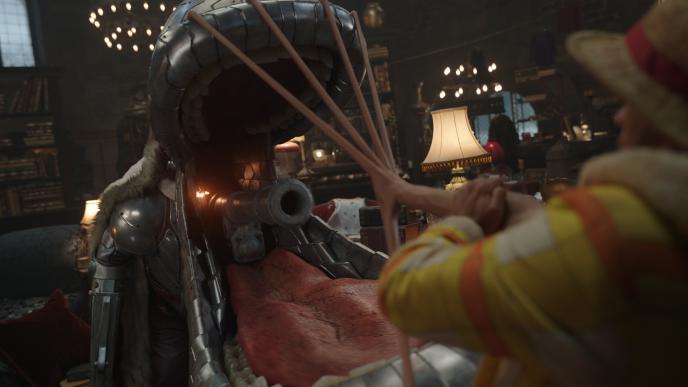
Wapol’s design leaned into the inherent fun absurdity of ONE PIECE, requiring a careful balance between exaggeration and believable form. Unlike in the original manga, we grounded his oversized mouth in a more anatomical, hippo-like structure to give it weight and character, while working closely with the client through multiple rounds of concepting to land on the final look.
The execution was technically complex, with multiple actors interacting simultaneously with a single CG asset. To support this, we built a flexible jaw system using overlapping panels that allowed the structure to bend and respond dynamically to physical interaction. Detailed work on the teeth and extended tongue ensured the asset held up under close scrutiny, keeping the focus on performance and action.
The Doctor’s on Deck
Bringing Tony Tony Chopper to life across multiple forms (biped, quadruped, and Heavy Point transformations) required a deeply performance-driven approach, centered on emotional authenticity. Beyond simply creating a visually believable character, the challenge was ensuring Chopper still felt true to the manga: vulnerable, expressive, comedic, and heartfelt. His performance needed to resonate with audiences emotionally while existing seamlessly within a grounded live-action world, preserving the charm that has made him such a beloved character for fans globally.
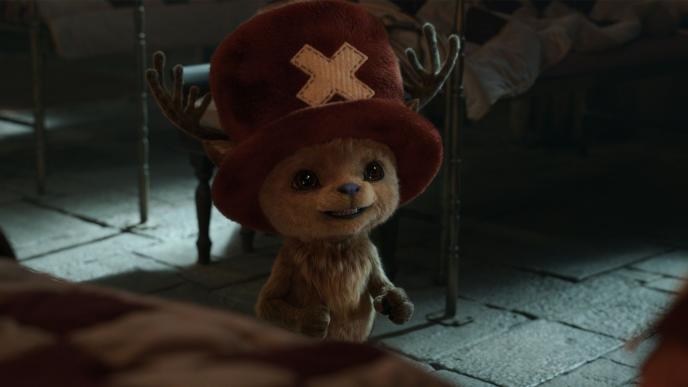
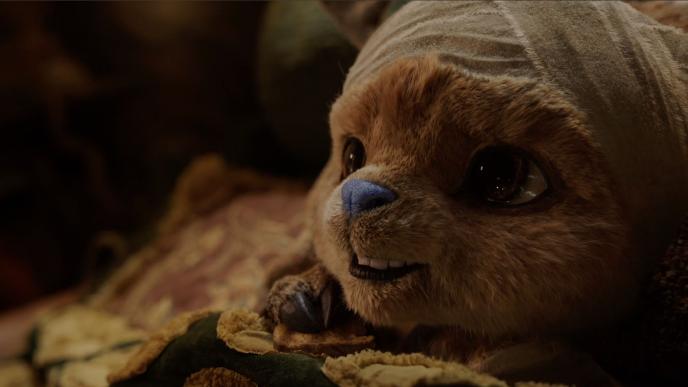
Mikaela Hoover is the voice and facial capture of Tony Tony Chopper, delivering a nuanced facial performance reference that became foundational to Chopper’s emotional language. On set, actress N’Kone Mametja provided physical reference for movement, staging, and body mechanics. These performances gave our animation team a rich base to build from, allowing them to refine and elevate moments through traditional animation techniques and bespoke reference shoots created throughout production. As the character evolved creatively, the team continually explored new expressions, rhythms, and subtle performance beats to ensure every interaction felt sincere, natural, and emotionally impactful rather than overtly animated or exaggerated.
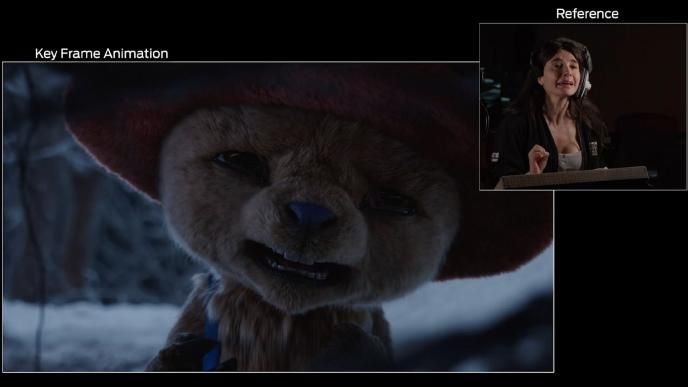
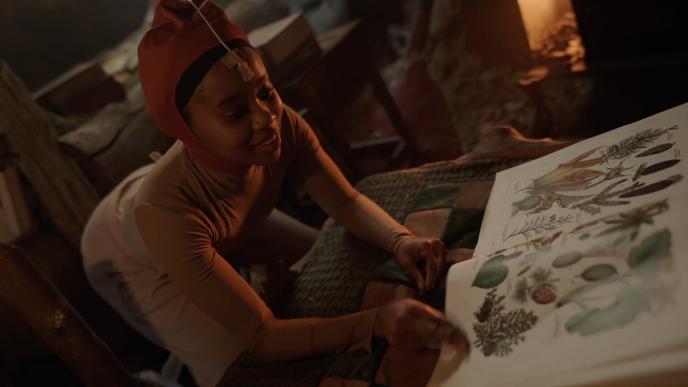
Chopper’s development followed a full asset pipeline, from concept design through modeling, rigging, and look development, with particular attention paid to preserving readability and emotional clarity through his fur and silhouette. To support this, developed new proprietary tools in our animation pipeline to help with quality control before shots were delivered to the client. The tool gave animators real time feedback on how Chopper’s groom affected his silhouette and facial performance, which meant they could quickly adjust poses and expressions while they were working rather than discovering issues later in the process. The character’s flexibility was key: appearing across varied environments, undergoing physical transformations, and interacting with practical elements like pink goo, all of which required significant R&D to execute seamlessly.


We delivered over 570 shots for Season 2, with more than 250 artists and employees contributing across disciplines.
ONE PIECE: Into the Grand Line has been met with critical acclaim, with early reviews highlighting its “stunning VFX work,” describing it as “visually charming and emotionally stirring, and praising a team that “knows how to get the job done.”

Credits
Related Case Studies
One Piece Season 1