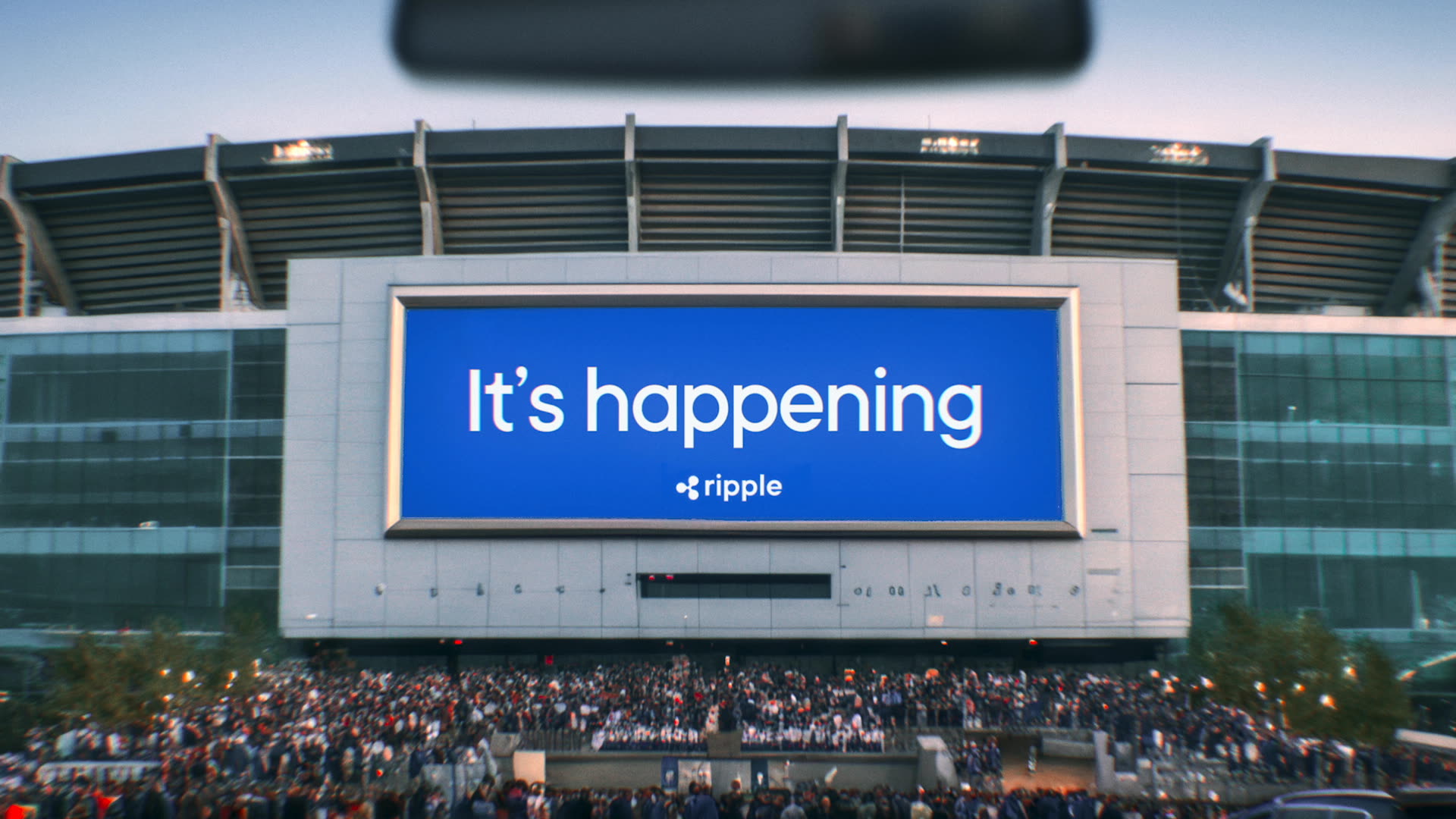
Ripple ‘Brand Film’
Our design team led by Creative Director Sharon Lock handled the full end-to-end production of Ripple's 30-second brand film, from the initial visual concept to original music, VO, final mix, grade and final versioning in three languages.

To create the film, the team used a combination of stock photography and video, generative AI, compositing and animated typography. A B to B film explaining the role of crypto currency in today’s financial landscape.
“There was a lot of nuance to finding and creating the right visuals for each section of the film. Research and Development involved some animation tests and ideas and collating libraries of potential imagery,” said Sharon Lock “The edit remained semi flexible while we animated shots and waited for audio composition + V/O record.”
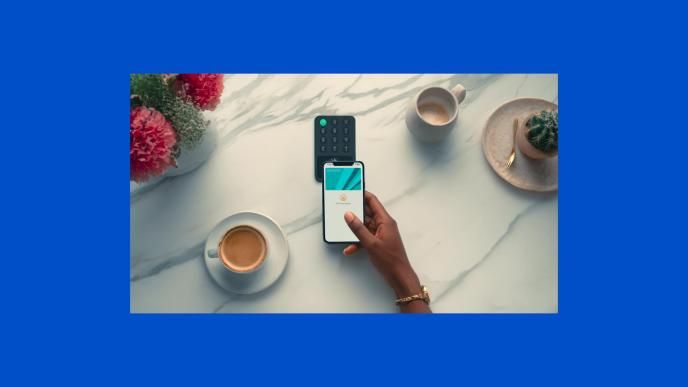
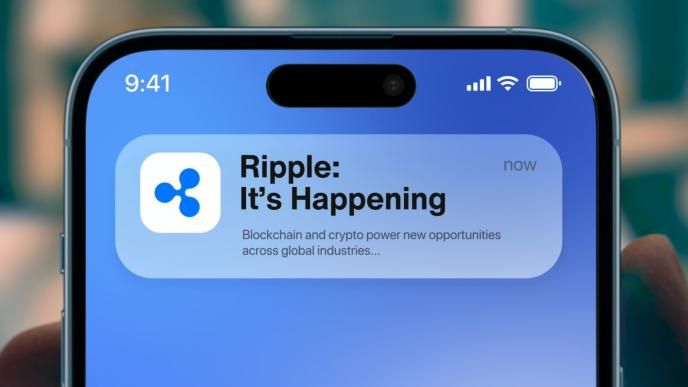
In collaboration with Framestore’s Visual Development team, a series of images and animated sequences were developed using generative AI-driven workflows. By integrating tools like ComfyUI and Nuke, the process maintained the flexibility to explore rich, tonal imagery. This approach supported the concept of a global campaign by creating evocative environments that avoided the constraints of identifiable, real-world locations.
A pivotal phase of the project involved the development of full 360-degree environment rotations during previs. This allowed for the exploration of fluid camera movement through each bespoke world. By establishing the camera language, pacing, and transitions early in the process, a rigorous creative framework was built prior to the commencement of final animation.
“The design of transitions between disparate moments were a core focus. Utilising match cuts, hyperlapses, and carefully integrated stock footage, a sense of continuity was established across diverse environments,” added Sharon Lock. “The technical challenge lay in identifying intuitive visual anchors that bridges these scenes, moving beyond traditional hard cuts to create a more immersive viewer experience.”
Generative AI tools proved to be a vital component of the problem-solving toolkit. Rather than replacing established methods, these AI-assisted workflows complemented traditional animation and compositing techniques. This hybrid approach enabled the rapid exploration of variations and helped address creative hurdles, particularly when crafting abstract imagery.