Project Hail Mary - FPS
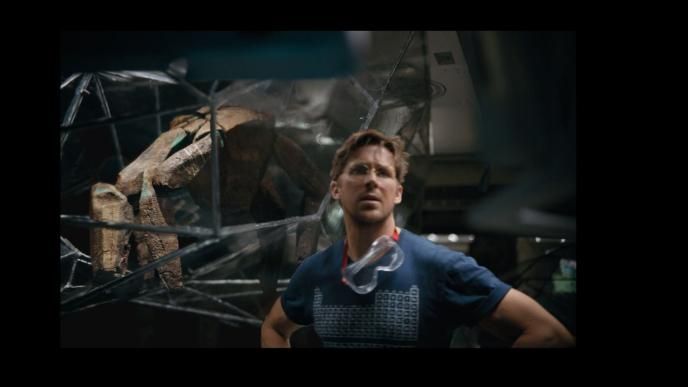
When directors Phil Lord and Christopher Miller began adapting Andy Weir’s hard sci-fi novel Project Hail Mary, they required a workflow that could keep pace with their iterative creative style. Framestore’s FPS team was initially brought on for a six-week engagement to assist the art department with set visualization. Working closely with our clients - DOP Greig Fraser, VFX Supervisors Paul Lambert and Mag Sarnowska and VFX Producer Barrie Hemsley - the scope expanded into a year-long residency at Shepperton Studios. By integrating directly as an internal "arm" of the production, FPS bridged the gap between conceptual design and principal photography, establishing a seamless foundation for Framestore's final visual effects led by VFX Supervisors Stuart Penn and Bob Winter, and Senior Animation Director Arslan Elver.

Engineering Accuracy
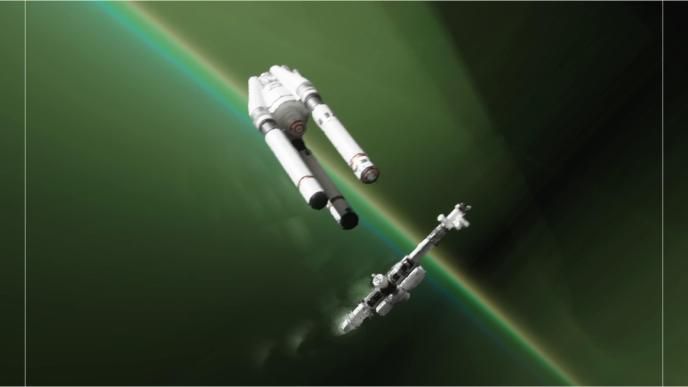
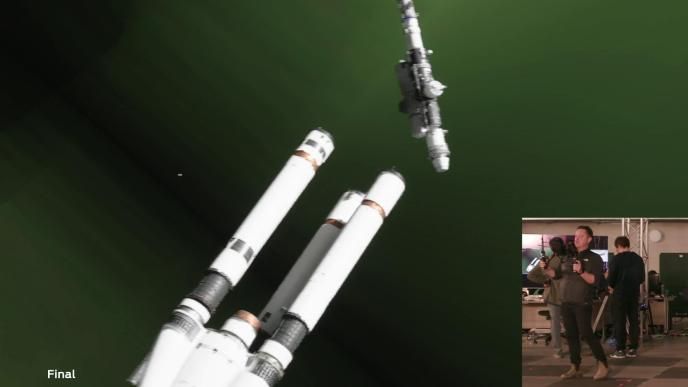
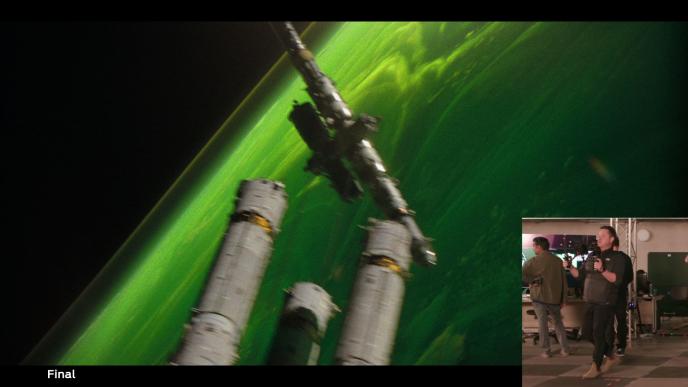
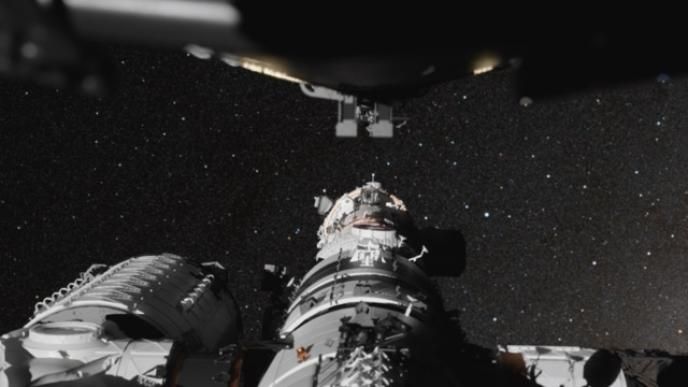
To ground the film in scientific reality, the filmmakers used Framestore’s FPS services to stress-test every logistical detail such as set scale and camera logistics, as well as the scientific accuracy in a risk-free environment. The team simulated gravity for centrifugal spins and verified tether forces to match Earth’s gravity exactly. Every celestial detail was calculated for precision: the distances within the Tau Ceti system were accurate to the novel, and the ship’s travel followed a realistic trajectory
Even the celestial bodies were engineered for realism; Adrian (Tau Ceti e) was correctly scaled, with its orbit speeds and angles calculated to be accurate. The team emulated the sun's size, solar power, and real-world camera settings to depict scenes with highest fidelity in real-time. This rigorous approach even extended to simulating the cockpit "spinout" to ensure the gravitational forces felt right for the story’s high-stakes blocking.
Solving the Dual-Gravity Puzzle
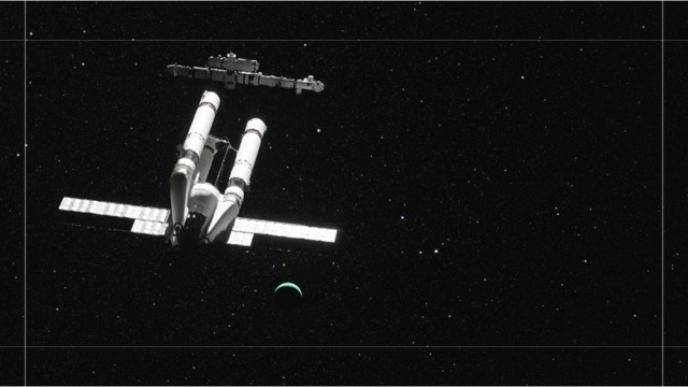
The primary challenge lay in the Hail Mary ship itself, which functions in two distinct configurations: acceleration mode (vertical-based gravity) and centrifugal mode (rotation-based gravity). This meant every set had to work in two 90-degree orientations.
Collaborating closely with the Art Department, FPS utilized Unreal Engine to configure the Hail Mary’s layout using the department’s proxy models as a foundation. Because the ship transitions between two 90° gravitational orientations—vertical 'Lighthouse' thrust and horizontal centrifugal spin—each module was engineered as a Node-Based Virtual Set within the Farsight ecosystem. This architecture allowed the team to instantly rotate the digital environment around a central axis, ensuring that every room functioned logically whether the 'floor' was positioned underfoot or as a wall. This allowed the filmmakers to verify that the physical sets and digital extensions would remain aligned across both flight modes. "Having our Visual Effects Supervisor, Stuart Penn embedded on set with us was incredibly helpful," noted the team. "His active presence ensured we were actively prepping for the post-production side while these complex alignment decisions were being made."
It became clear very early in the process that VR was going to become an integral part of the exploration process, to be able to get a more accurate understanding of scale and Grace's journey from his perspective. One issue with VR, though, is that it can be quite an isolating experience and hard for anyone not in the headset to have context as to what the user is looking at or referencing. So, utilizing Farsight, focus was put on how we create a space that makes it easier for everyone else in the room to be a contextual part of the conversation. We developed custom 'followers' that would allow others in the room to see what the VR user sees via a specified camera and lens package with dampening to improve the experience. We then recorded these sessions and delivered them back so they had complete reference to the conversation.
Michael Zaman, Realtime Supervisor, highlights the practical impact of this stage.

Using VR, we were able to visualize the designs in both gravity orientations, allowing us to spot issues quickly. Early Medical Bay designs, for example, worked great in lighthouse mode, but the hatches to the rest of the ship were inaccessible in centrifugal gravity

The Motion Capture Volume
As the project evolved, FPS transitioned into a full-scale motion capture volume, set up and operated by our Capture Lab team. This stage allowed stand-ins to perform key beats in real-time, giving the filmmakers the freedom to discover blocking and pacing months before principal photography.
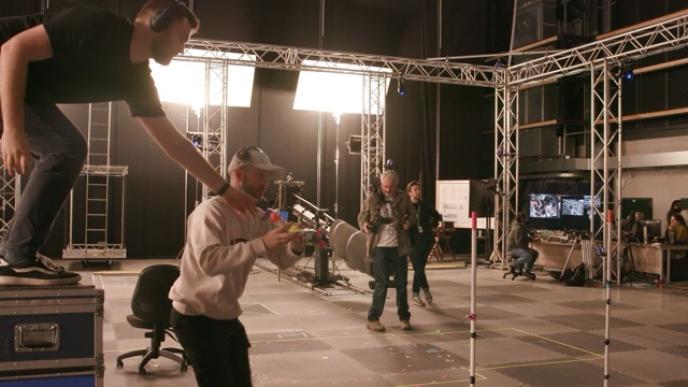
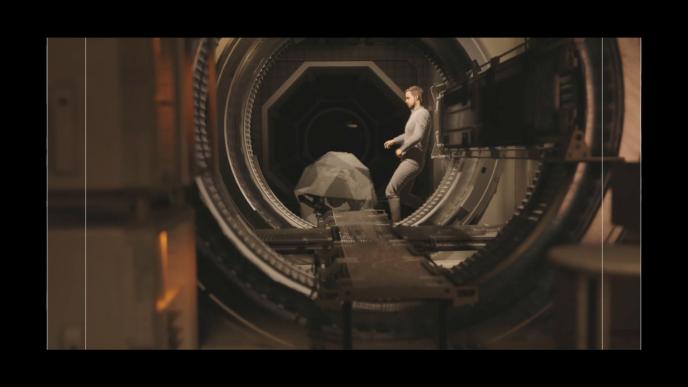
Accuracy in set design and scale was key to the virtual production process. FPS’ collaboration with the art department continued throughout the process, allowing for quick iterations and updates as changes were made. This ensured that decisions around set configurations and any subsequent changes could be communicated back to the art department quickly.
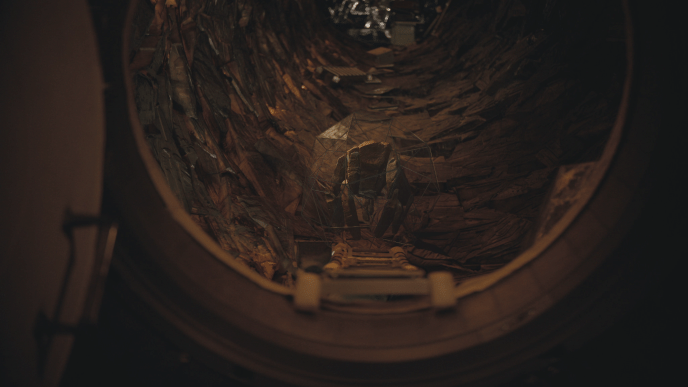
Environments were modelled using final blueprints to the 1/16th inch. All moveable elements such as stools, cockpit chairs and beds had movement limitations that were matched inside Unreal to allow for truly accurate movement and limitations in our virtual sets.
“The cockpit was a real challenge, with the wall designed to be split into 20 different panels and stay structurally sound. We had to model the scaffolding structure, and match how each panel would pull, so we could say with certainty that a shot would work on the real set. There was even a moment where we had to make a last minute Set build change to the cockpit to allow Greig to shoot some angles he found in scouting."

FPS engineered multiple bespoke virtual camera tools to handle the technical complexity of the scene, one of which was a physical mixing deck customized with tactile dials and trackballs, allowing Greig Fraser to "perform" camera movements and manipulate virtual lighting manually. Another was a bespoke joystick setup that functioned more like a musical instrument than a computer interface; by mapping lenses and exposure to physical controls, Fraser could art-direct the virtual sun with the same intuition he employs on a physical stage.
VCam camera data, lighting, ship animation and all lensing elements were delivered to VFX as the final camera and layout for finals to render.
Some stats from VCam:
- 65 days
- 1096 shots
- 60 hours of vcam footage
- 218,244 seconds of vcam footage
End-to-End Efficiency
As the sets, ship layout and exterior shots evolved, these all flowed into other areas of development. The Unreal environments were exported for film as a base environment model, long before any scans of the sets were processed.
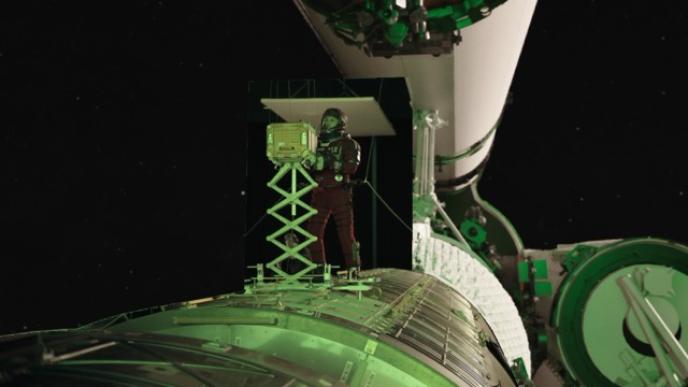
The same ship exterior and environments such as Adrian were then used as content for the on-set Simulcam process. Giving the exact same tools and controls to Greig Fraser for controlling the light in the engine, he could visualise what the light would look like across the whole ship live. This allowed on-set lighting changes where needed to help integrate the rest of the ship exterior that wasn’t physically built.
The simulcam process allowed live tracking of the Main Camera. FPS, in collaboration with Amazon MGM, then delivered a live comp of the rest of the exterior of the ship and the rest of the environment back to the DOP and directors, allowing them to better frame for the rest of the ship or exterior elements such as Adrian Exterior.
FPS delivered rough hand-matched secondary cameras every take, giving each take a full reference of the final shot. These Backgrounds were delivered to editorial and the client as a first-pass CG extension for slap comps. Filling the edit before ever turning over for finals.

Finding the Performance with Postvis
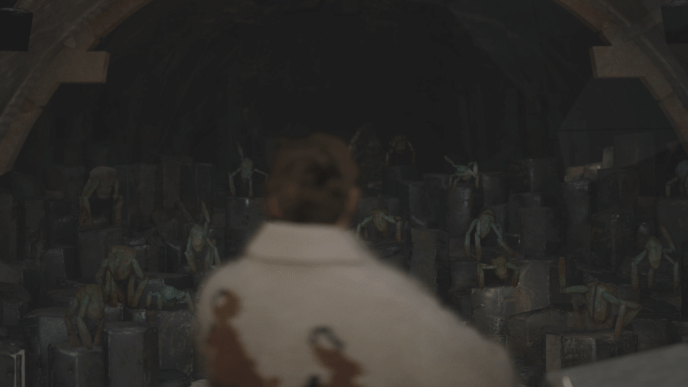
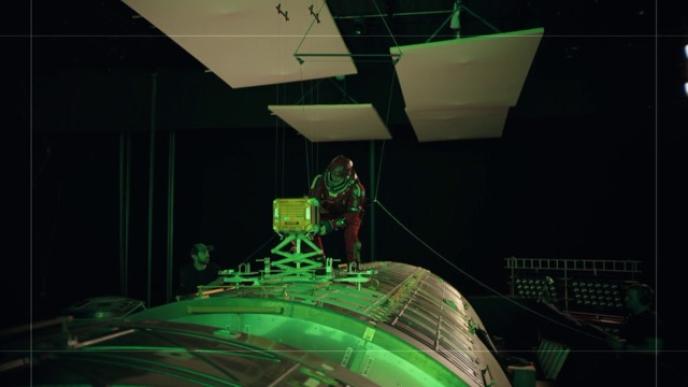
Finally, FPS were tasked with delivering Postvis of Rocky for the director's cut. Arslan Elver was embedded with the directors for months, reviewing the edit and refining Rocky’s performance in full CG shots. Using the puppet as a base where possible, FPS delivered 475 postvis shots to help the directors visualise rocky’s performance and refine the cut.
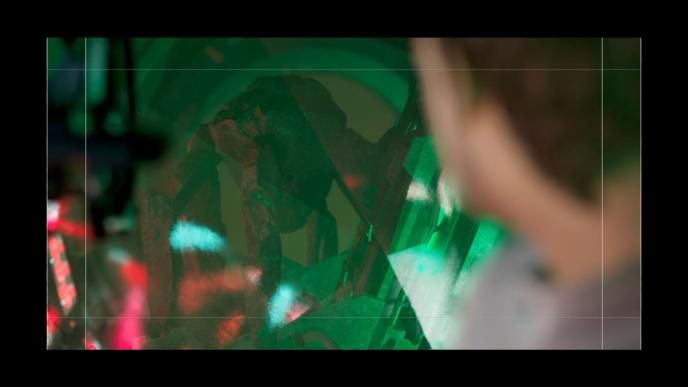
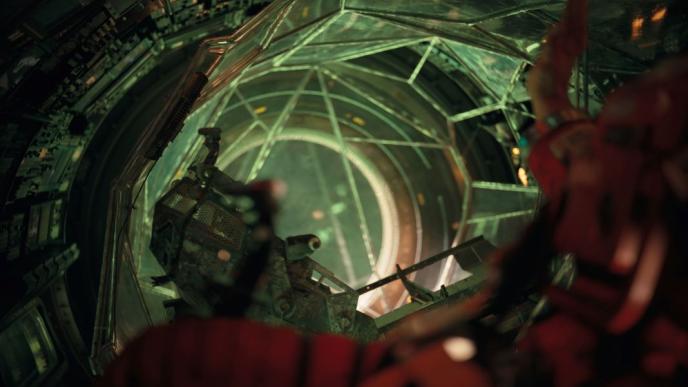
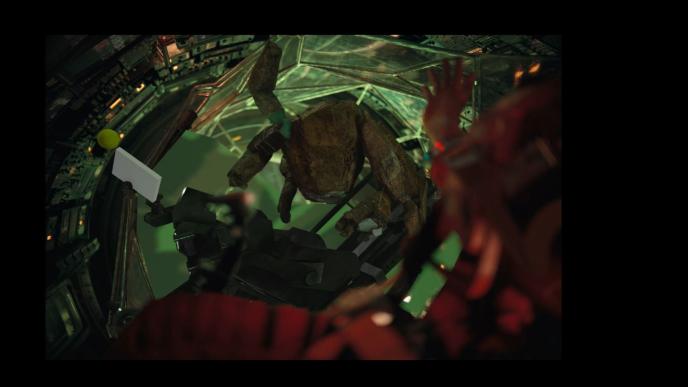
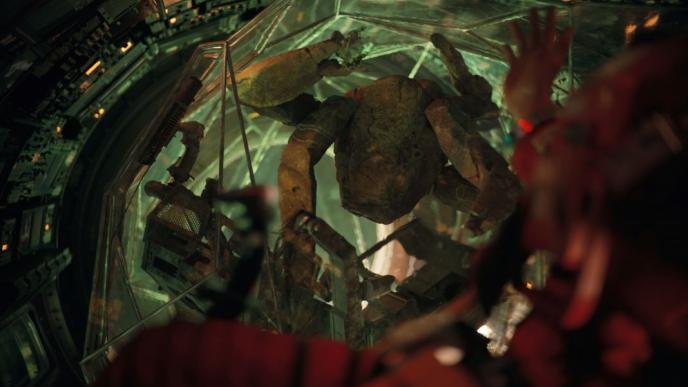
FPS reused Unreal sets for Set extensions, environment renders and occasionally to support in paint. Whilst sharing a VFX Film rig, allowed all animation scenes to be handed over to Film as a first blocking pass. The lighting rig used in Postvis was developed to share lights and looks across Postvis and Film, allowing consistent quality and look across postvis and early animation, before final lighting was deliverable.